O Infraslim

O Infraslim

"Quand la fumée de tabac sent aussi de la bouche qui l'exhale, les deux odeurs s'épousent par infra-mince." - Marcel Duchamp

"Quando a fumaça do tabaco cheira também à boca que a exala, os dois odores se casam pelo infrafino." - Marcel Duchamp

A epígrafe acima é uma das anotações de Marcel Duchamp sobre o inframince (ou infrafino num português honesto), conceito que ele desenvolveu em fragmentos avulsos de papel, escritos sobretudo entre meados dos anos 1930 e meados dos anos 1940. Duchamp nunca os organizou em teoria nem os publicou em vida. Essas notas só vieram a público postumamente, reunidas e editadas apenas em 1980, mais de dez anos após sua morte. São pensamentos soltos, quase domésticos, sobre um fenômeno que ele se recusava a definir. Dizia que não se podia defini-lo, apenas dar exemplos. O mais célebre é o da epígrafe: quando a fumaça do tabaco cheira também à boca que a exala, os dois odores se casam por inframince.

A fumaça não é a boca. A boca não é a fumaça. Mas há um instante (uma espessura quase nula) em que uma coisa atravessa a outra e as duas se tornam inseparáveis. O calor que fica num assento recém-desocupado. O ruído de uma calça de veludo cotelê roçando ao caminhar. O intervalo entre o disparo e a marca da bala no alvo. Duchamp colecionava essas espessuras mínimas como quem coleciona o que o mundo tem de mais fino: esse interstício onde duas coisas, sem se confundirem, se tocam.

Do inframince ao infraslim

Tomo esse conceito de Duchamp e o traduzo (no sentido literal e no sentido de deslocamento).

Mince, em francês, é o mesmo que slim em inglês: fino, delgado, magro. A palavra já carrega Duchamp dentro de si, atravessada por outra língua. Mas a tradução também é um desvio, e é nele que está o que me interessa. O inframinceduchampeano é um fenômeno do mundo físico-sensível: calor, odor, som, o intervalo entre dois instantes. O infraslimopera numa camada similar mas diferente: a camada dos signos. Nesse caso o infraslim é a própria diferença que faz a diferença. Em palavras mais objetivas, infraslim é informação em seu estado puro. O algo mais fino entre o signo per see a coisa em si.

Infraslim é a finura mínima entre o signo e a coisa.

Nenhum objeto chega neutro até nós. Uma cadeira nunca é só uma cadeira. Vivemos imersos no que Yuri Lotman chamou de semiosfera: uma atmosfera de significados captados por nossas mentes, assim como captamos da biosfera sinais sensórios a partir de nossos corpos. Uma cadeira é também design, classe, uso, história, corpo, hábito, relação.

Todo objeto já é linguagem antes de qualquer toque. O infraslim é a espessura quase nula onde essa linguagem encosta na matéria que a carrega. E, mais do que isso, é também o instante em que duas dessas linguagens (que existiam separadas, cada uma vibrando no seu sistema de origem) se atravessam ou se casam. Como a fumaça e a boca. Só que aqui não são odores que se misturam, são campos inteiros de significado. O sagrado e o brinquedo. O oráculo e o disco rígido. A compaixão cristã e a não-dualidade budista.

O infraslim não é um objeto. Não é uma técnica. Não é uma obra. É um evento, e dos mais discretos.

O infraclick

No meu processo, trabalho com objetos do mundo (encontrados, comprados, herdados, fabricados) e os coloco em proximidade sobre uma espécie de mesa ou campo. Durante dias, às vezes semanas, eles ficam ali, mudos entre si. São apenas coisas lado a lado. Tudo ainda depende do meu olhar para existir como relação.

Até que algo se estabiliza. Eu chamava esse momento de click. Mas click é pouco, e é impreciso. Click é o som de duas peças que se encaixam, o estalo de um mecanismo, o "aha" de quem resolve um problema. O que acontece aqui é outra coisa: não sou eu quem encaixa os objetos; é a gravidade e o magnetismo do momento em que os objetos se encaixam entre si, sem mim, abaixo da minha decisão, abaixo do meu campo consciente.

Por isso prefiro chamar esse fenômeno de infraclick.

Infra porque acontece na camada fina, abaixo do limiar da vontade (não é uma escolha que eu faço, é uma confirmação que eu recebo e percebo). Click porque ainda assim há um evento: um instante datável, algo que estala. Às vezes literalmente: o zunido no ouvido chega antes do olho; algo range, desloca ar, e eu sei antes de ver. O infraclick é o som de um infraslim confirmado. A partir dele, a relação entre os objetos parou de precisar de mim. O campo de tensão se tornou autônomo.

A obra que resulta disso, para processos didáticos a mim mesmo e aos meus, tem outro nome: hipercolagem.

Hipercolagem: a ressonância do campo que não pára

A hipercolagem é a consequência, o infraslim é a causa. Numa hipercolagem ninguém vê apenas os objetos ou signos acoplados. Se vê ou se sente a emanação que reverbera dele.

Aqui está outro aspecto que me interessa no infraslim: ele não se esgota no instante em que acontece. O infraclick é um começo que não termina. Depois que o campo se torna autônomo, a obra continua soando. Não metaforicamente apenas. Há uma reverberação que se mantém e que, quando encontra o espectador, um som que eleva a frequencia das form-pensamentos às saídas de labirintos antigos da mente.

Essa frequencia de linguagem vibracional está sempre sendo reproduzida pela hipercolagem que atingiu o status de infraslim. Mesmo quando ninguém está olhando, mesmo quando saio da sala, ela está lá, disponível a converter-se em ressonância de elevação.

Penso na peça de John Cage, As Slow As Possible (Organ²/ASLSP), que toca neste exato momento dentro de uma igreja em Halberstadt, na Alemanha, e que está programada para durar 639 anos. As notas são sustentadas por pesos que mantêm as teclas pressionadas: uma pedra sobre a tecla, e o som não para. Um acorde pode durar anos. É uma música que ninguém ouvirá inteira, que continua soando "embaixo da terra", indiferente à nossa presença, mantida por uma pedra que aperta uma tecla quase infinita.

O infraslim é isso; o que se segue à partir de sua reverberação é uma nota sígnica que não se interrompe: uma ressonância que a obra pode produzir por conta própria, autônoma, contínua, tocando um som que ninguém sabe de onde vem mas que sempre precisará alguém para "ouvir". A hipercolagem que ressoa sozinha está apenas reproduzindo, no espaço e no tempo da galeria, um infraslim que se confirmou uma vez e que nunca mais se calará.

Diante de uma hipercolagem, a pergunta não é "o que isso representa?". É: que reorganização do real isso produz? O infraslim é o momento exato dessa reorganização: o micro-sismo em que a semiosfera se rearranja e essa nova configuração ganha corpo, peso, sombra, lugar no espaço. E som: um som que não para.

O artista, nesse processo, não é autor de heróico sentido. É mais um condensador, um transdutor: alguém que reconhece objetos já vibrando e os aproxima até que a vibração ressone em confirmação (ou não). Não posso provocar o infraslim por decreto. Posso apenas preparar as condições: coletar, aproximar, escutar, esperar. O campo decide. Ninguém decide pelo campo.

Duchamp dizia que o inframince não se define, só se exemplifica. O infraslim herda essa modéstia, e acrescenta uma aposta: a de que o invisível tem espessura. Mínima, quase nula. Mas suficiente para habitar uma obra ao mesmo tempo que também é suficiente para ser habitada por uma obra. E, uma vez habitada, suficientemente vibrátil para nunca mais parar de ressonar.

J.P. Mognon

The Power (and the emptiness) of AI Imagery

The Power (and the emptiness) of AI Imagery

Many times we forget that certainly one of the main functions, if not _the_ main function, of an image is to represent something beyond itself. Like a semiotic arrow pointing toward some domain of hard reality. Whether as an index or as a symbol, an image points to a reality that transcends it. Much of its power comes precisely from this relationship. When we look at a photograph, for example, it’s not just the visual composition that affects us, but the certainty that it refers to a real, lived moment — something that actually existed in the world. It is this connection with something “more real than itself” that gives images their depth and sustains their cultural, aesthetic, and emotional impact.

AI-generated images, on the other hand, lack this order of power. They may impress through technological novelty, form, or detail. Yet they are stripped of symbolic grounding in the real. What seems captivating today may, in time, reveal itself to be less potent than it appears. This is precisely because there is no “outside of the image” to which it points. The consequences are still difficult to measure. However, one can anticipate that once the initial excitement fades, the perception of symbolic emptiness will become clearer. This will inevitably reposition the place of AI in image-making and compel us to reevaluate what we truly seek in images.

What do we seek in images? A synesthetic experience that speaks for itself? A visual explanation of the world? Or perhaps a mirror, a map, a memory? Surely, we all carry our own uses and longings for images. They console, provoke, inform, enchant. And yet, amid the flood of generated visuals, perhaps the most urgent thing is to pause and ask: what grounds an image? What gives it weight, resonance, staying power? For now, this reflection — on the hollow or the whole that lives within each image — is the most honest place I can stand.


Female model standing confidently in the middle of a giant Squid Game arena

Female model standing confidently in the middle of a giant Squid Game arena.


O poder (e o vazio) das imagens de IA

Muitas vezes esquecemos que certamente uma das principais funções, se não a principal função de uma imagem é a de representar algo para além de si mesma. Como uma flecha semiótica que aponta para algum domínio do real duro. Seja como índice ou como símbolo, uma imagem aponta para uma realidade que a transcende, e grande parte de seu poder deriva justamente dessa relação. Quando vemos uma fotografia, por exemplo, não é apenas a composição visual que nos afeta, mas a certeza de que ela remete a um instante real, vivido, que existiu no mundo. É essa conexão com algo “mais real do que ela mesma” que dá densidade às imagens e sustenta seu impacto cultural, estético e emocional.

As imagens criadas inteiramente por inteligência artificial, por outro lado, carecem dessa ordem de poder. Elas podem impressionar pela novidade tecnológica, pela forma ou pelo detalhe, mas são destituídas da ancoragem simbólica no real. O que hoje parece encantador pode revelar-se, com o tempo, menos potente do que aparenta, justamente porque não há um “fora da imagem” para o qual ela aponte. Suas consequências ainda são difíceis de medir, mas é possível antecipar que, passada a euforia inicial, a percepção de vazio simbólico se tornará mais evidente, reposicionando o lugar da IA na produção de imagens e nos obrigando a reavaliar o que realmente buscamos nelas.

Afinal, o que buscamos nas imagens? Uma experiência sinestésica que se sustente por si só? Um gesto explicativo do mundo? Um espelho, talvez, ou um vestígio, ou uma promessa? Cada pessoa se aproxima das imagens com anseios próprios: buscamos consolo, estímulo, informação, beleza. Em meio ao fluxo incessante de visualidades geradas por máquinas, talvez o gesto mais necessário seja justamente esse: interromper o automatismo, fazer a pergunta essencial. O que confere espessura a uma imagem? O que a ancora, o que a mantém viva no tempo? Neste instante, esta pergunta — entre o vazio e a plenitude que habita cada imagem — é o lugar mais verdadeiro de onde consigo falar.

The rise of Hypersurrealism

The rise of Hypersurrealism

Surrealism, a cultural and artistic movement that emerged in the early 20th century, was characterized by its explorations of the irrational and expeditions in the unconscious. The movement was led by figures such as André Breton, Salvador Dali, and Max Ernst, who sought to tap into the power of the unconscious mind to create works of art that were both unsettling and liberating.

The concept of surrealism represented a radical departure from the prevailing artistic trends of the time, which emphasized realism and naturalism. Surrealists rejected these traditional modes of representation, instead drawing upon dream imagery, symbolic language, and other forms of irrational thought to create works of art that challenged viewers' perceptions, expectations and conceptual borders.

Over the years, surrealism has continued to influence and inspire artists, writers, and thinkers across a range of disciplines. However, with the advent of artificial intelligence, we are now witnessing a new era of artistic exploration - one that takes the principles of surrealism to a whole new level. We are at the rise of Hypersurealism.

Lines and circles, 2023 ® Chewy Stoll (@chewystoll)

The concept of "hyper" generally stands for something that is excessive, beyond normal, or over-the-top. In various contexts, "hyper" can be used as a prefix to describe an exaggerated state or condition, such as hyperactive (excessively active), hypersensitive (overly sensitive), or hyperbole (exaggerated statement). In computer technology, "hyper" is often used in reference to hyperlinks or hypertext, which are ways of linking information within electronic documents or websites. Additionally, the term "hyper" can refer to hyperrealism, which is an art style that depicts objects or scenes with a level of detail that is almost indistinguishable from reality.

In contrast to hyperrealism stands hypersurrealism.

Hypersurrealism encompasses this art style that seeks to explore the intricate details and high-resolution imagery found within the realms of the imaginary, the subconscious, and the unconscious. Diverging from hyperrealism, hypersurrealism does not aim for a faithful representation of reality, but rather embraces a hyperrepresentation of the inaccurate, the dreamlike, and even the abstract. This opens up a vast expanse of possibilities, transcending the boundaries between forms, genders, species, and categories that were once unimaginable.

Thanks to the advent of deep learning techniques and the emergence of new large language models and generative image algorithms, these possibilities are now achievable - in high-definition. This remarkable advancement unleashes a fresh lexicon of images into the art world and visual cultures, expanding the boundaries of artistic expression and visual storytelling.

AI functions as a mind's camera, as aptly stated by the esteemed artist Claire Silver in her Twitter musings. However, AI's image generation capabilities extend beyond a mere mental apparatus; it acts as a soul's camera. It enables us to venture into the depths of the unconscious with unprecedented depth. Through the utilization of sophisticated algorithms and machine learning techniques, we now possess the capacity to produce artworks that surpass their predecessors in terms of surreality, unsettling qualities, and immersive experiences.

The advancements of Hypersurrealism herald a novel frontier in artistic expression. This movement both builds upon the foundations laid by surrealism and expands its horizons in novel and enthralling ways. As we continue to navigate this nascent field, we can only fathom the uncharted realms of the unconscious that await our discovery and the artistic prospects that will emerge in consequence.

New visual cultures unfolding from Hypersurrealism

0418, 2023 by Masanobu Hiraoka (@budou_mochi)

As we delve into the enigmatic realm of hypersurrealism, we realize that its allure extends also beyond the boundaries of artificial intelligence. Encompassing a diverse range of digital artistic expressions and potentially even material art forms yet to emerge. It stands as a captivating trend to keep a close eye on in the years to come, as it infiltrates contemporary art and permeates visual cultures at large.

Hyperssurealism started to become a catalyst for artistic innovation, prompting visionaries like the creative virtuoso Joe Pease to explore other avenues of expression like old school video art montages or cartoonish extrapolations as seen in the works of Masanobu Hiraoka. This imparts a delightful twist to hypersurrealism, surpassing the confines of AI (even though AI seems to be the talk of the town these days, everywhere we look).

Open the Floodgates, 2022 - Joe Pease (@joepease)

In this ever-evolving landscape, hypersurrealism thrives as a vibrant force, embracing the quirks of human creativity. Moreover, as it expand towards the space outside the screensphere, it holds the potential to inspire and shape the emergence of novel material art forms, which may further enrich and expand the realm of hypersurrealistic experiences.


I would be delighted to conclude this mini-essay leaving you with a piece from Joe Pease. His is a kind of artwork that expands the boundaries of the the hypersurreal and emerges as a more palpable digital artifact then what we deal with on a daily basis.

Synchronicities in the Artsphere

Synchronicities in the Artsphere

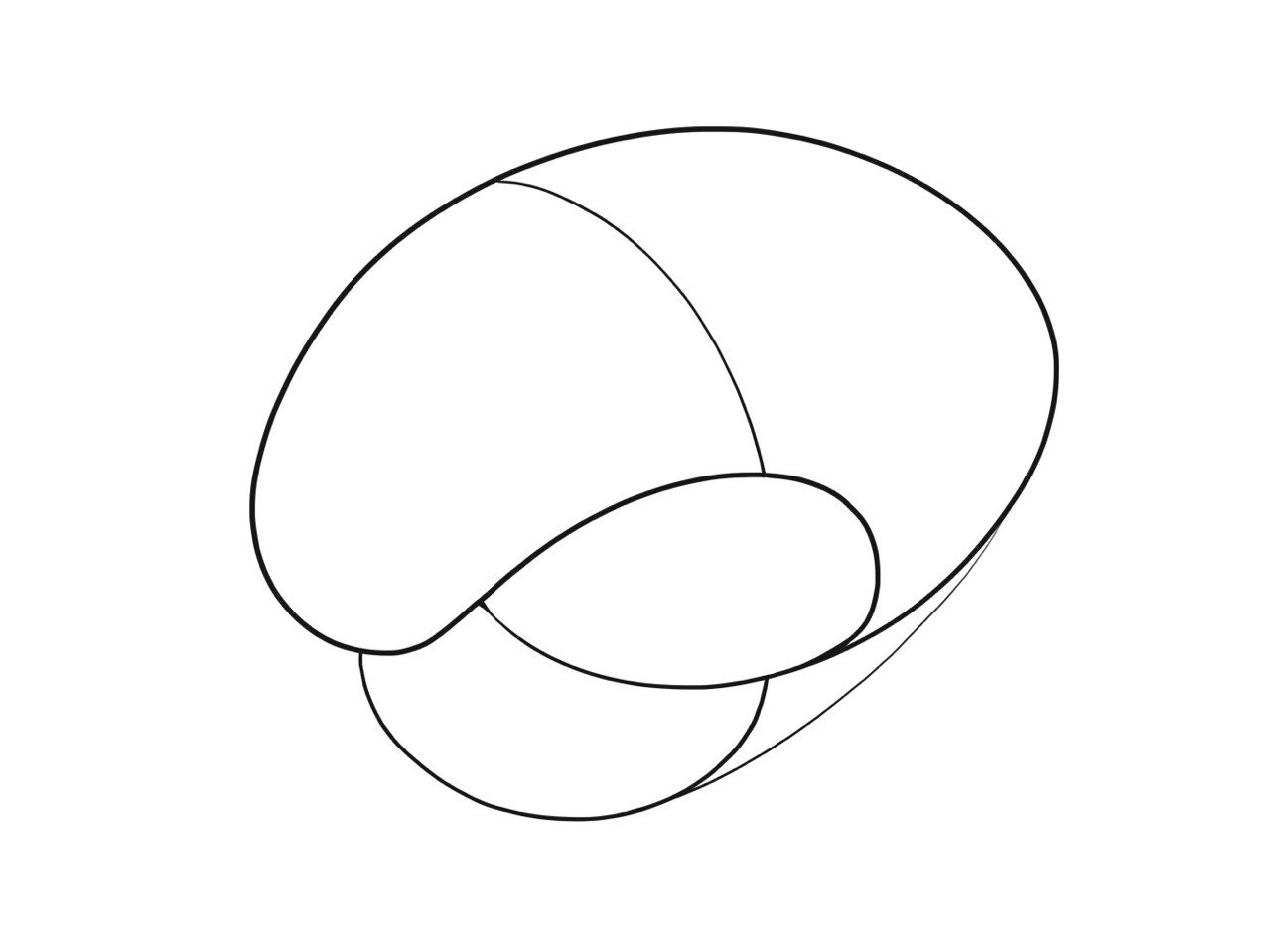
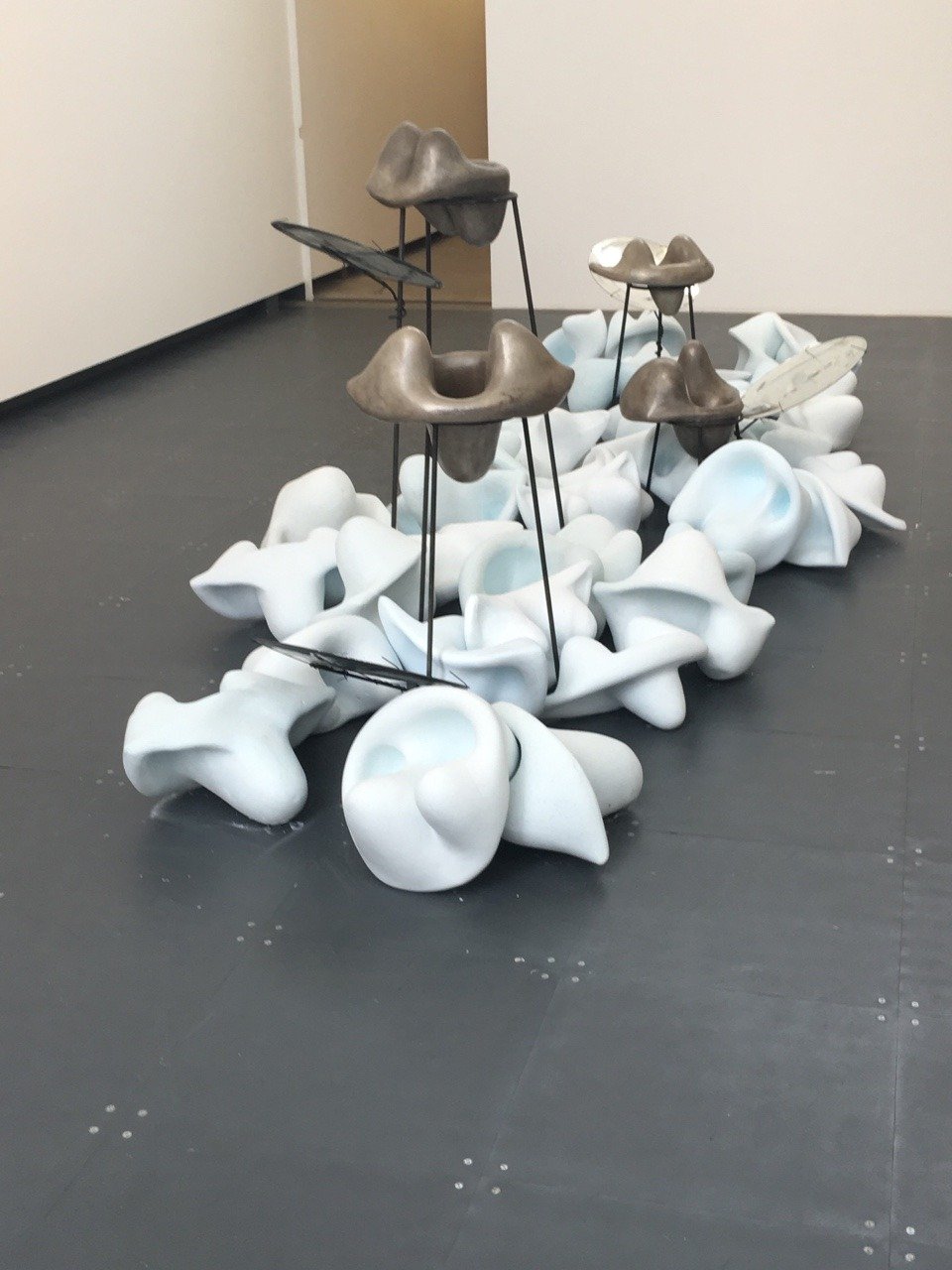
Browsing trough old archives I found these personal photographs from the first Tunga’s individual exhibition after his death back in 2016 - Pálpebras at Galeria Milan in Sao Paulo, Brazil. These captivating pieces of Tunga’s sculpture work bear a striking resemblance to a three-dimensional manifestations of my long-standing drawing practice, which I have coined as Biograms.

Within these frames, we witness an intriguing convergence of art forms, where this Tunga's exquisite series evoke a mesmerizing resonance with the intricacies of my own specific artistic practice towards the life of the biograms or, in other words, the life of lines - presented here in tridimensional forms. These artworks, reminiscent of biological topographies and microlandscapes, serve as a bridge between my years of dedicated sketching of the biograms and the tangible expressions brought forth by Tunga's visionary craftsmanship at the last phase of his poetics. Which gives meaning to my own path to serve as a kind of bridge to the evolutions of this imagination territory.

Beyond these personal photographic archives and this playful coincidence of forms, lays a more intriguing convergence, since over the past three years, I have had the privilege of developing a close collaboration with Mario Vitor Marques, Tunga's principal assistant and his head of commercial affairs during the outstanding career of the artist. Together, we have embarked on a groundbreaking project called Labirinto, which connects a vibrant community of collectors and artists from around the world. Labirinto serves as a transformative platform that fosters meaningful connections and collaborations within the art world, further expanding the boundaries of artistic exploration.

Within the realm of these personal archives of mine and the convergence of Tunga's visionary posthumous presented series, we encounter a serendipitous alignment that extends beyond mere coincidence. In this amalgamation of art and collaboration, we witness how synchronicities in artsphere can ignite profound resonances, fostering movements that expand cultural horizons. Art becomes the radar that decodes and amplifies culture, propelling us forward and ensuring the perpetual motion of our world.

Humaning drawings trough Ingold's life of lines

Humaning drawings trough Ingold's life of lines

I am humaning, you are humaning, they are humaning. Finally, we are all humaning. Human is a verb. I learned that from Tim Ingold - professor and researcher of social anthropology at the University of Aberdeen, UK. Ingold became the basis for my recent art research that is prospecting many of the ideas and concepts from his book "The Life of Lines" (2015). This book, as well as all ramifications of Ingold's research on lines, became a foundation for my already extensive practice of the so called biograms.

Tim Ingold’s book cover for his second work about Lines.

In Lines: a brief history, his 2007’s precursor and first book on the subject, Ingold founds an anthropology of the line, which is a sensitive and expansive, integrative and inclusive approach to an all new anthropology of lines touching the domains of dance, art, architecture, music and, more recently, time, biology and ecology.

Ingold unfolds these correlations through and uses the written media as an expression for it, while I have tried myself to find an aesthetic cognition that uses line drawings to feed a similar objective: studying and exploring the nature of the line and its relationships with the blobs also a formfactor explored by Ingold.

Reading Ingold is a profound encounter with myself and with the human. From the joy of finding an eternal companion of research and studies to the certainty that the body of my drawing now has an unremarkable skeleton and musculature defied by this new filed of scientific research. The journey through the strange world of lines and biograms has gained a sense of security so that I can launch myself into what Ingold himself defines as the main task for contemporary social sciences: transforming human sciences and the social sciences into a more open, more speculative and, above all, more experiential and experimental field of developments for humanity.


A vida das linhas de Tim Ingold e a humanação do desenho.

Eu humano, tu humanas, ele humana. Enfim, nós humanamos. Humano é um verbo. Aprendi isso com Tim Ingold - professor e pesquisador de antropologia social da universidade de Aberdeen, no Reino Unido. Ingold se tornou base para na minha recente descoberta de seu seu livro "A vida das linhas" (The Life of Lines - livro de 2015 ainda não traduzido para o português). Este livro, bem como todas as ramificações da pesquisa de Ingold sobre as linhas, tornaram-se base fundamental e fundadora para o meu já extenso estudo sobre os biogramas.

Biogram 02 : 46 Mixed Emotions | L3XVS_N0VU5 collection

Em Lines: a brief history, seu precursor e primeiro livro sobre o tema de 2007, Ingold funda uma antropologia da linha, que é uma vertente sensível e expansiva, integrativa e inclusiva sobre os momentos em que tal antropologia da linha toca a dança, a arte, a arquitetura, a música e, mais recentemente, o tempo, a biologia, a ecologia e, funda com isso, o ato de humanar. 

Ingold desdobra essas correlações através de um pensamento que se usa da mídia escrita como expressão, ao passo que eu tenho tentado fundar uma cognição estética que se usa do desenho e suas expressões pós-digitais para alimentar o mesmo fim. Ato que consta em meu já longo estudo e prática dos biogramas.

Ler Ingold é um encontro profundo comigo e com o humano. Da alegria de encontrar um companheiro eterno de buscas e estudos à certeza de que o corpo de meu desenho  agora possui um esqueleto e uma musculatura inquebrantáveis. A viagem pelo estranho mundo das linhas e dos biogramas ganhou um conforto e uma segurança para que possamos nos lançar àquilo que o próprio Ingold define como a tarefa da contemporaneidade: transformar as ciências humanas e as ciências sociais em áreas mais aberta, mais especulativas e, acima de tudo, mais experienciais e experimentais.